A rotary table stops at 90°. While its controller is off, the shaft moves another 15°. When the power comes back, can the drive tell that the table is at 105° before it moves? On a directly coupled axis with its zero already set, an absolute encoder covering that range can report the new angle at startup. A conventional incremental encoder and an unpowered counter have no record of the extra 15°. That difference matters far more on a machine that must resume from a known angle than on a motor that only needs a speed reading.
What Each Encoder Tells the Controller
An incremental encoder reports changes in position. On a common quadrature model, the controller counts transitions on two channels and uses their sequence to determine direction. Once the machine has established a known zero, the count can represent a position just as readily as it represents travel. The position remains useful for as long as the relationship between the count and the machine is known.
An absolute encoder reports a position value that identifies where the shaft is within its measuring range. A drive can read the same stationary angle repeatedly. It can also derive speed from changes in position over time. Both types can therefore support speed and position control. The practical distinction is how the controller obtains its starting position. Renishaw’s guide to encoder feedback.
| Question | Incremental encoder | Absolute encoder |
|---|---|---|
| What does a reading mean? | How far the axis has moved from a known start. | Where the axis is within the encoder’s range. |
| What establishes machine zero? | A known event, such as a home sensor and a reference mark. | An offset set during commissioning relates the encoder reading to machine zero. |
| What must the input support? | For an A/B model, the signal levels, quadrature mode and maximum edge rate. | The encoder’s interface and position format, including any turn-count field. |
What Happens When Power Returns?
On the rotary table, saving the last incremental count would bring back 90°. To recover the true angle after unobserved motion, the machine needs a known reference. A homing routine might find a switch and then use the encoder’s Z index to refine the reference. A typical rotary index repeats every turn. On an axis that travels several revolutions, the machine also needs a way to identify which turn it is on.
Restart requirements vary even along a single packaging line. A speed display can resume once new pulses arrive. A labeler can register the next carton at its photoelectric sensor and measure travel from there. If the controller lost the records for cartons already on the belt, a shaft angle cannot identify those cartons. For a positioning table that must know its angle before its first move, immediate absolute feedback solves the actual restart problem.
When Does One Turn of Absolute Position Suffice?
A single-turn absolute encoder distinguishes positions within one revolution. On a rotary dial that repeats the same sequence every turn, 30° may be all the controller needs. Now consider an encoder directly coupled to a lead screw with 5mm of carriage travel per revolution. The screw angle is the same at 30° on turn two and 30° on turn three, while the carriage positions differ by 5mm. Adding more angle bits makes each turn more finely divided, but leaves that ambiguity between turns.
A multiturn absolute encoder adds a turn count. Check that its specified turn range covers the full stroke, and that its counting mechanism follows movement during loss of external power if the load can back-drive. POSITAL, for example, documents a magnetic multiturn design that harvests enough energy from shaft movement to update its revolution counter. That is a property to verify for the selected model. POSITAL’s single-turn and multiturn measurement principles.
Which Feedback Fits the Machine?
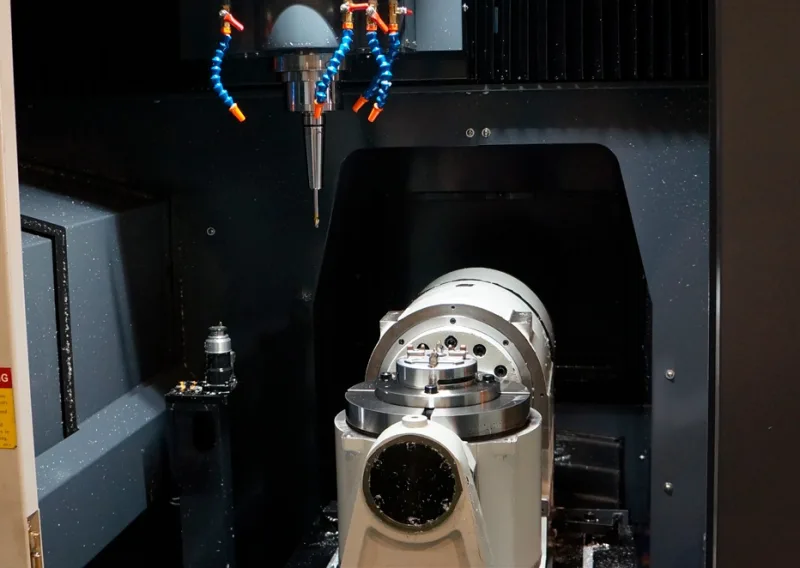
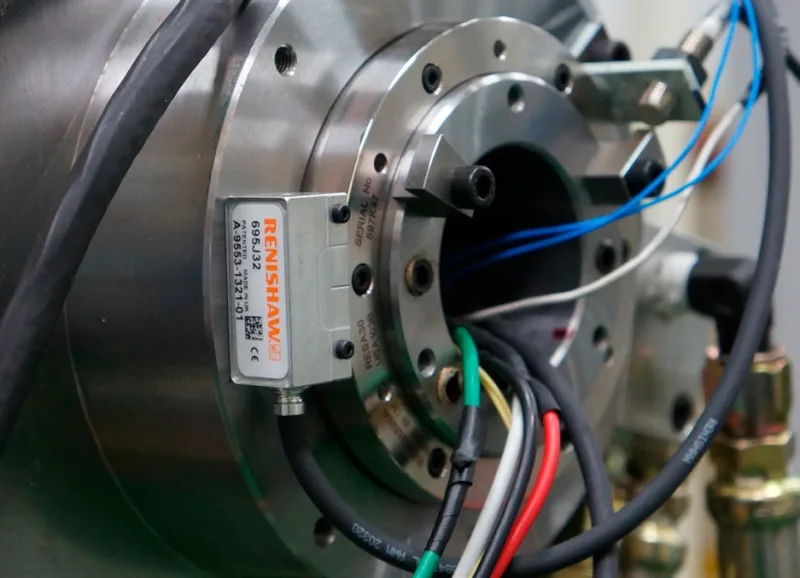
Two rotary-table designs show why the machine’s job matters more than its name. Matsumoto Machine Corporation uses a Renishaw incremental ring scale with a reference mark to track indexing. Taiwan’s Industrial Technology Research Institute (ITRI) uses absolute readheads on the rotation and tilt axes of its table. Its project engineer identified avoiding a reference move after a stoppage as a production benefit. Both teams needed precise angular feedback. Their designs illustrate two ways to establish the angle a controller uses. MMK’s incremental rotary-table application and ITRI’s absolute rotary-table application.
For a purchase decision, write down the first movement the machine must make after a restart and the position information required to permit it. If fresh speed feedback or a repeatable reference move is enough, an incremental encoder can do the job. If the first move already requires a known coordinate, choose an absolute range that covers every possible position and confirm drive compatibility. In either case, specify accuracy and mechanical coupling separately. A finer readout cannot tell the controller how far a loose coupling has slipped.