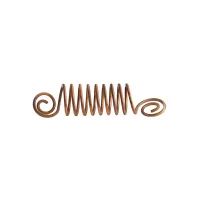


A tension spring, also called an extension spring, resists forces that pull its ends apart. Stretching stores energy in the spring; reducing the load allows it to retract toward its initial length and pull the connected mechanism back.
These springs are generally cylindrical, with coils that are closely wound in the unloaded state. Hooks or loops transfer the pulling load to the assembly. End forms include full loops, half-loops, English loops and side hooks, allowing the connection geometry to suit the mechanism.
Typical uses include fitness equipment, garage doors, toys and clotheslines. Industrial applications include machine return mechanisms, counterbalancing systems and production-line tensioners. Washing machine lids and electrical switch mechanisms also use extension springs for return or reset action.
Specify the custom size and connection form together with the material and finish. The end geometry is part of the spring design and should match the points where the pulling force is applied.
| Item | Specification |
|---|---|
| Size | Custom made. |
| Material options | Spring steel (SWC), piano wire (SWP), stainless steel (SUS), mild steel, phosphor bronze, 60Si2Mn, 55CrSi, T9A, A3, titanium alloy, nickel-plated wire, galvanized wire, tinned wire and enameled wire. |
| Surface treatment options | Galvanizing, nickel plating, anodizing, black oxidation, electrophoresis, powder coating, gold plating, silver plating, tin plating, paint, chrome plating, phosphating, Dacromet, oiling, copper plating, sandblasting, passivation and polishing. |
| Packaging | PE bags, cartons and pallets, customized to customer needs. |
| Application areas | Automotive hardware accessories, electrical equipment, electronic products, medical equipment, fitness equipment parts, industrial equipment, mechanical parts, office equipment and children's toys. |
| Spring and stamping manufacturing experience | 31 years. |
