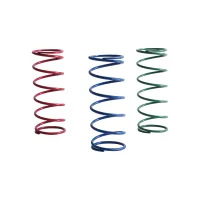


Compression springs shorten under an axial load, storing energy as the coils move closer together. As the load is reduced, the spring expands toward its free length and provides a return push. This action supports valve operation, machine mechanisms, shock absorption and electrical contacts.
Cylindrical helical forms are common, while conical and barrel-shaped designs accommodate different installation requirements. The coils normally have clearance between them when unloaded. Ground ends can provide a stable seating surface and distribute the applied load.
Applications include ballpoint pen mechanisms, automotive suspension, toys, washing machines, valves, molds, heavy machinery and shock absorbers. Smaller compression springs are also used in smartphone buttons and battery contacts. Dimensions are made to order; the spring form, material and finish should be specified for the intended assembly.
| Item | Specification |
|---|---|
| Size | Custom made. |
| Material options | Spring steel (SWC), piano wire (SWP), stainless steel (SUS), mild steel, phosphor bronze, 60Si2Mn, 55CrSi, T9A, A3, titanium alloy, nickel-plated wire, galvanized wire, tinned wire and enameled wire. |
| Surface treatment options | Galvanizing, nickel plating, anodizing, black oxidation, electrophoresis, powder coating, gold plating, silver plating, tin plating, paint, chrome plating, phosphating, Dacromet, oiling, copper plating, sandblasting, passivation and polishing. |
| Packaging | PE bags, cartons and pallets; packaging can be customized to customer requirements. |
| Application areas | Automotive hardware accessories, electrical equipment, electronic products, medical equipment, fitness equipment parts, industrial equipment, mechanical parts, office equipment and children's toys. |
| Spring and stamping manufacturing experience | 31 years. |
